From Testimony to Commodity
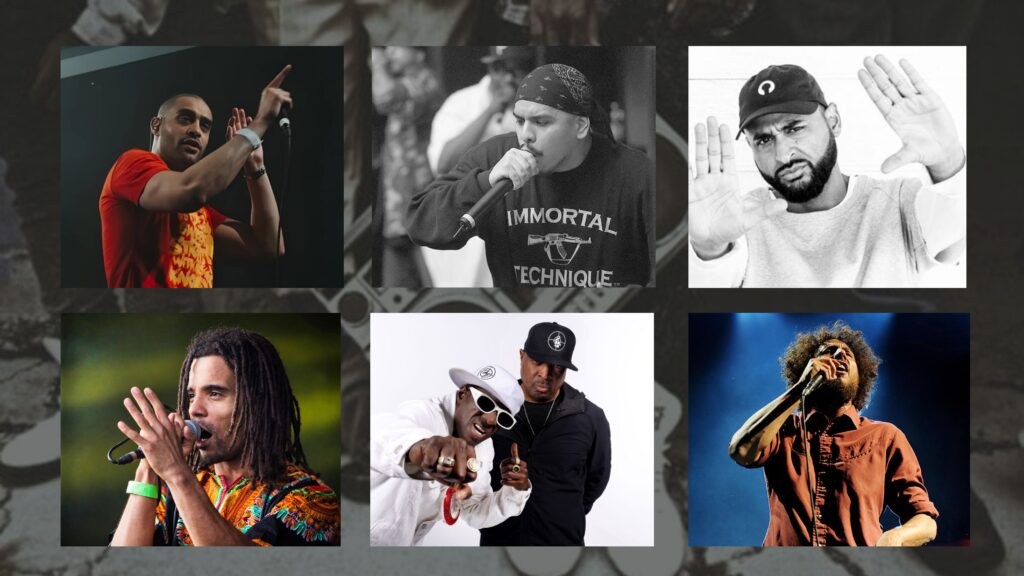
Let’s be clear from the start. This is not a claim of secret meetings in dark rooms. Nor is it a proven conspiracy. Instead, it’s a reasoned surmisation — based on patterns, incentives, and outcomes. And those outcomes matter.
Hip-hop was born from struggle. It emerged from abandoned neighbourhoods, poverty, police violence, and systemic neglect. It was testimony. It was political even when it wasn’t labelled as such. It was communities speaking back to power.
Over time, however, the industry realised something important: it could sell that pain back to the people.
Not the resistance.
Not the solidarity.
Not the structural critique.
The pain.
As a result, violence, hyper-masculinity, nihilism, misogyny, excess, and self-destruction became easier to package. Easier to market. Easier to export. Eventually, that version of hip-hop became dominant — not because it reflected the full culture, but because it was commercially reliable.
Structural Critique vs Marketable Spectacle
Look at the contrast.
On one side, you have artists like Immortal Technique in 4th Branch:
“How could this be the land of the free, home of the brave Indigenous holocaust, and the home of the slaves? Corporate America dancin’ offbeat to the rhythm. You really think this country never sponsored terrorism?”
That isn’t escapism. Rather, it’s structural critique. That’s naming empire, genocide, corporate complicity, and state violence. In other words, it challenges mythology at its core.
Now compare that to a mainstream radio staple like Nicki Minaj in Super Bass:
“Only rap bitch pussy taste like fruit/Back to the thuggin, now we sippin sizzurp/Pour it down my ass let ’em drink it till he bizzurp”
One interrogates power. Meanwhile, the other sells fantasy.
One demands historical awareness. At the same time, the other feeds spectacle.
This isn’t an attack on individual artists. Instead, it’s an examination of incentives. From a corporate perspective, escapism is safe. Excess is profitable. Caricature is marketable. But systemic critique? That’s volatile. That doesn’t sit comfortably beside multinational brand deals.
Moreover, in the digital age, streaming algorithms intensify this dynamic. They reinforce whatever already performs well, push familiar tropes harder, and quietly sideline material that disrupts consumption patterns.
Hip-Hop’s Political Power
When N.W.A shouted Fuck tha Police, they weren’t chasing controversy. Instead, they gave language to a rage that had been ignored for generations. That track was an accusation — a refusal to stay silent about institutional abuse. Decades later, its relevance hasn’t faded.
That alone says something about hip-hop’s political power.
Because of this, very few art forms can take lived experience, compress it into three minutes, and turn it into a slogan that echoes across generations.
As a result, hip-hop becomes uniquely significant.
As a musical form, it has more political potential than almost any other genre. It allows storytelling with urgency and clarity. It doesn’t hide behind metaphor unless it chooses to. Most importantly, it speaks directly from the perspective of the disinherited and the downtrodden.
Young people are far more likely to listen to Lowkey explain the realities of the arms industry than they are to politicians repeating rehearsed lines about that same industry. Hip-hop reaches audiences that press conferences never will.
Therefore, who controls the microphone matters.
This Isn’t About Race — It’s About Class
At this point, precision matters.
This is not a “white problem.” It’s a privilege problem. A class problem. A power problem.
Yes, many cultural gatekeepers come from advantaged backgrounds. However, that isn’t genetic. It’s the result of centuries of capital accumulation and inherited access. Power doesn’t operate on skin colour. Instead, it operates on alignment.
Barack Obama expanded drone warfare.
Rishi Sunak continued austerity policies that punished the poor.
Priti Patel pushed hardline immigration policies.
None of this was driven by ethnicity.
Rather, it was driven by class loyalty.
By proximity to power.
By allegiance to a system that rewards obedience upward and extraction downward.
The same logic applies to culture.
When destructive narratives are more profitable than politically awakening ones, those are the narratives that rise. Not because of secret racial agendas. Not because artists are puppets. Simply because markets reward what preserves the status quo and marginalise what destabilises it.
Yes, Political Hip-Hop Breaks Through — But Notice How
Of course, political hip-hop does break through sometimes. Public Enemy shook the late ’80s. Kendrick Lamar wins Grammys while dissecting trauma and power. J. Cole regularly injects social critique into mainstream success.
So conscious rap doesn’t disappear.
However, notice the pattern.
When it succeeds, it’s framed as exceptional. As high art. As a moment. Rarely does it become the default commercial identity of the genre. Instead, the baseline market continues to favour spectacle over structural critique, excess over analysis, and individual flex over systemic diagnosis.
These artists don’t disprove the argument.
They illuminate it.
They show political hip-hop can rise — but it is almost never allowed to define the genre at scale.
Cultural Capture and the Neutralisation of Protest
Meanwhile, the right points at the most sensationalised, corporate-filtered version of hip-hop and declares, “This is the culture.” At the same time, voices dissecting empire, prisons, war, and economic exploitation remain largely underground.
If that pattern is real — and it’s reasonable to question whether it is — then what we’re witnessing isn’t organic evolution.
It’s cultural capture.
And this ties directly back to FTS.
Because this is exactly how protest gets neutralised everywhere.
Movements become merchandise.
Anger becomes branding.
Rebellion becomes aesthetic.
Gradually, everything sharp gets softened. Everything threatening gets diluted. Everything revolutionary gets repackaged and sold back to us with a barcode.
Hip-hop isn’t unique here. It’s simply one of the clearest examples.
Hip-hop is not just music.
It’s not just entertainment.
It’s not just culture.
In the right hands, it is a weapon — not of violence, but of awareness.
And awareness has always been the thing power fears most.
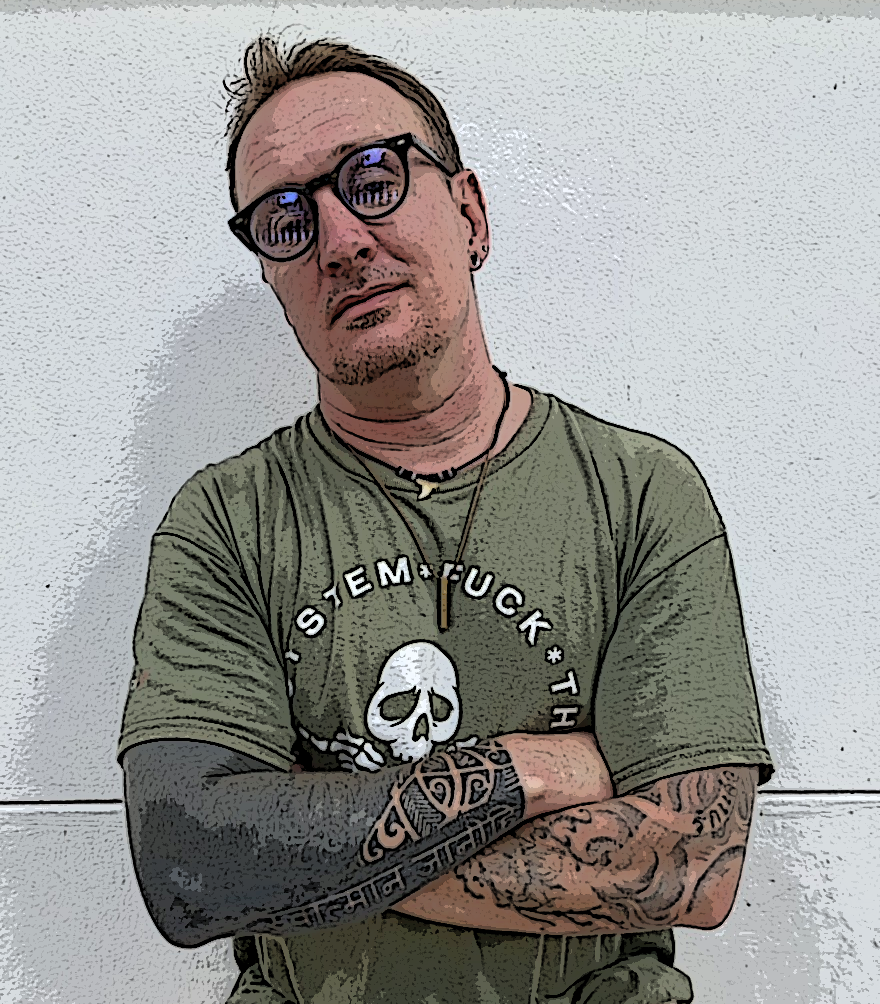
This is me. Not a model. Not an influencer. Just someone who got tired of pretending everything’s fine.
FTS isn’t a fashion brand. It isn’t a hustle. And it isn’t charity. It’s soft resistance.
It’s for people who see what’s happening — the inequality, the corruption, the endless wars, the quiet theft of our futures — and don’t want to stay silent anymore. I’m not here to convince anyone. If this resonates, you’re already part of it. If it doesn’t, that’s fine too.
The designs are simple. The message is blunt. Any profit goes to causes that challenge the system, not reinforce it.
Wear it if you want. Ignore it if you don’t.
Either way — stay awake.