By Thomas Oxford | Fuck The System
No one has ever been shot by a form. No one has ever bled from a stamp.
That’s the whole trick.
∗
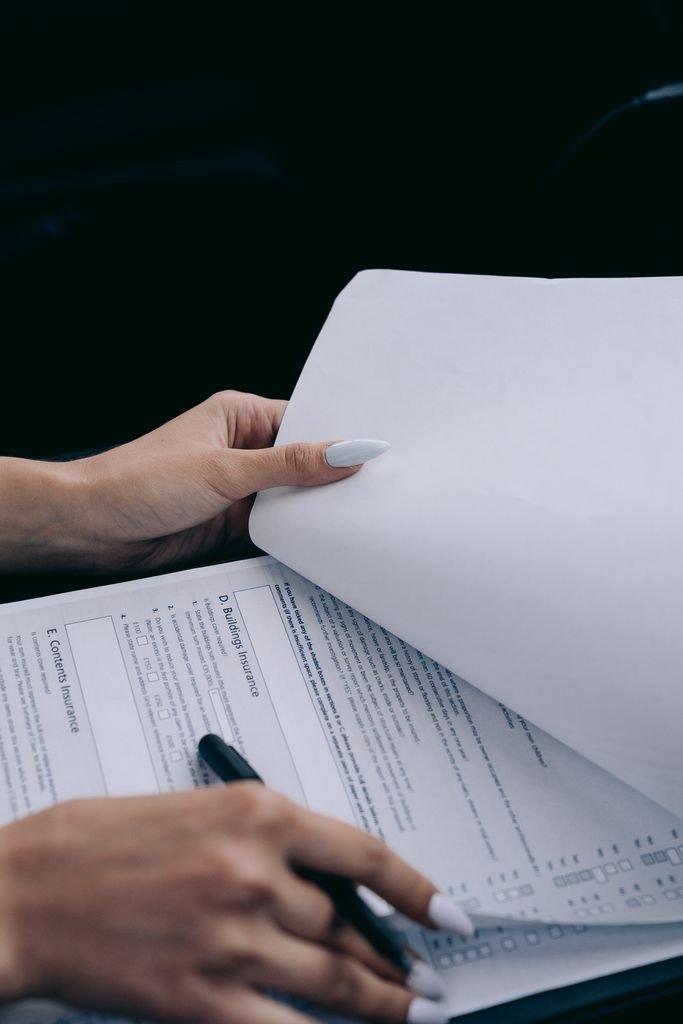
Violence used to announce itself. A fist, a baton, a boot on the neck — you could name it, photograph it, put it on the news. So the system evolved. It found a weapon with no fingerprints: the queue, the checkbox, the “please resubmit with the correct documentation.”
Slow violence doesn’t leave a mark. It leaves a life — smaller than it should have been, spent in waiting rooms, filling in the same information for the ninth time, learning the specific dialect of institutional English designed to be almost, but not quite, understood.
∗
Ask who has time to sit on hold for three hours. Ask who can afford to lose a day’s wage to stand in a line that might, at the end of it, simply close. Ask who owns a printer.
The form is neutral. The person filling it out is not. That gap — between the paperwork’s pretend equality and the world’s real inequality — is where the violence lives. It doesn’t fall on everyone the same. It never does. It falls hardest on the people with the least buffer between them and disaster: the ones who can’t eat the cost of a delay, can’t hire someone to read the fine print for them, can’t afford to be told come back next week for the fourth week running.
∗
Call it what it is: administrative violence is still violence, just laundered through a process. Denial-by-delay is still denial. A system can starve you of a benefit, a visa, a diagnosis, a discharge — slowly, politely, in triplicate — and never once raise its voice.
This is the genius of it. Nobody signed off on cruelty. Nobody has to. The cruelty is emergent — it comes out the other end of a thousand small, defensible, individually reasonable-sounding rules. Everyone along the chain was just doing their job. That’s the design, not the bug.
∗
Paperwork performs legitimacy the way a suit performs trustworthiness. Official letterhead. A reference number. A tone of impersonal authority that makes you doubt your own frustration — surely if it’s this hard, it must be for a good reason. That doubt is the product. The form isn’t there to communicate. It’s there to make you feel like the delay is yours to solve, not theirs to answer for.
∗
None of this is an argument against order. Systems can be built to serve people instead of exhausting them — that’s a design choice, not a law of nature. The problem was never that rules exist. The problem is a rule built to look neutral while quietly deciding who gets to eat, get treated, get through the door.
∗
So here’s the small rebellion available to anyone holding a clipboard against you: refuse to mistake slowness for accident. Refuse to internalize the wait as your failure. Every form you’re forced to fill out twice is a design decision someone made — and design decisions can be named, resisted, and changed.
The uniform doesn’t have a badge number anymore. It has a font.
FVCK THE SYSTEM.